Thinking about a new construction or infill home in Belmont? You are not alone, but this market works a little differently than buyers expect. In Belmont, most new housing is not happening in giant master-planned communities. It is happening lot by lot, project by project, and that means the details matter. This guide will help you understand where new homes are showing up, what to verify before you commit, and how to move with confidence in a fast local market. Let’s dive in.
Belmont new construction looks different
In Belmont, new construction is mostly infill development. That means homes are typically added on vacant or underused parcels rather than in large, newly built subdivisions spread across the city.
Belmont’s land-use pattern helps explain why. The city says residential uses are mostly west of El Camino Real in the hillsides, while commercial and industrial uses are mostly east of and along El Camino Real. Belmont Village serves as the town center and a Priority Development Area, so buyers often see new housing tied to specific redevelopment sites rather than broad neighborhood expansion.
Where new homes appear in Belmont
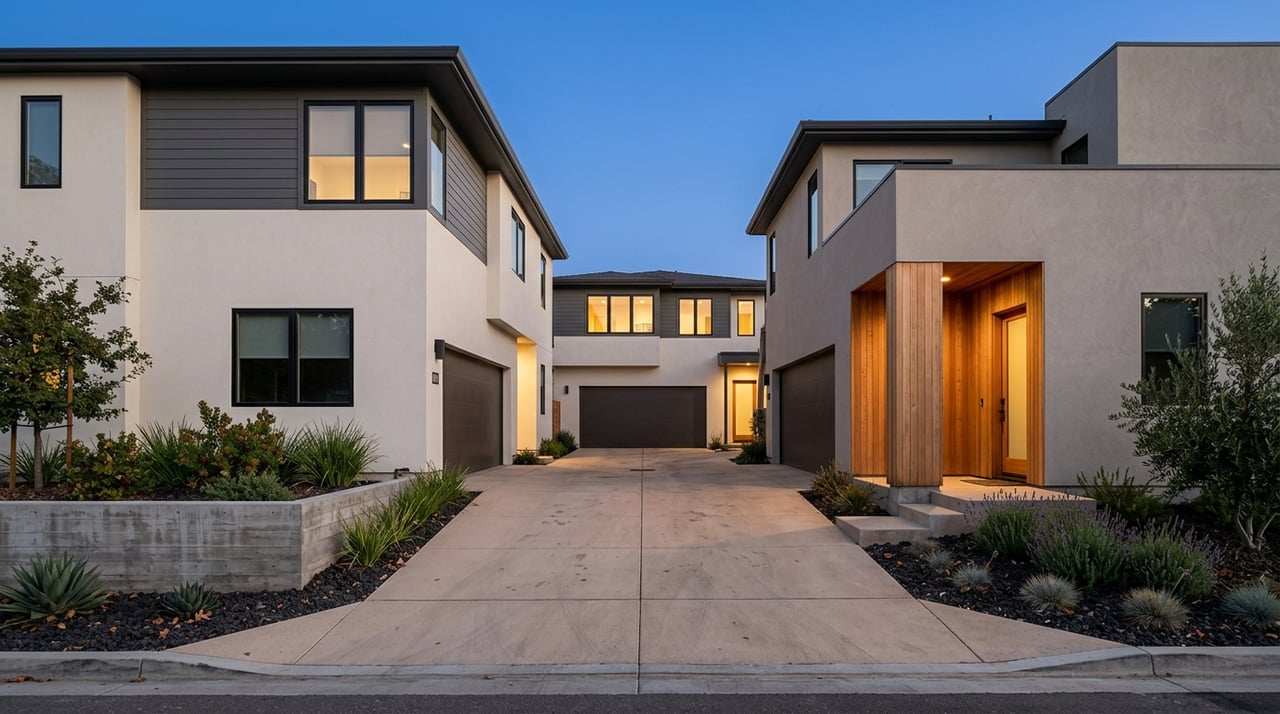
If you are searching for a newly built home in Belmont, expect a mix of product types depending on the site. Some projects are single custom-style homes on individual lots, while others are compact multi-unit infill communities.
City project pages show how varied that can be. One Monte Cresta Drive project involves a road extension and a new 3,299-square-foot multi-story residence with an attached garage. At 800 Laurel Avenue, an existing single-family home is being replaced by four multi-story townhome buildings with 16 dwelling units and a private access road.
Belmont Village and El Camino corridors
In and around Belmont Village and along El Camino Real, buyers may see opportunities tied to redevelopment and underutilized parcels. These areas can involve more layered approvals tied to design, parking, or site layout.
For you, that means each opportunity should be evaluated on its own facts. Two homes may both be called new construction, but the path that created them can be very different.
Hillside infill opportunities
West of El Camino Real, especially in hillside areas, some new homes come from challenging lots that require more study before development. These can appeal to buyers looking for a unique setting or a custom-home feel, but they usually require deeper diligence.
Belmont identifies hillside districts HRO-1 and HRO-2 as areas constrained by steep slopes, geologic and soils hazards, and inadequate roadways. The city also notes that many lots in these districts do not have fully improved roadway access.
Why hillside lots require extra caution
A hillside parcel in Belmont may be advertised as buildable, but that does not mean it will be simple or even feasible to develop. Belmont specifically warns that some parcels may still be undevelopable or may require lengthy and costly permitting.
That is one of the biggest differences between buying a finished new home and buying land or a teardown with plans. If you are considering a lot or early-stage project, you need to understand what has already been approved and what still needs to happen.
Key hillside issues to review
Before you move forward on a hillside property, Belmont recommends that buyers:
- Review planning documents
- Talk with city staff before purchase
- Check roadway access
- Confirm utility availability
- Involve a civil engineer or geotechnical consultant when needed
Some parcels may also require a Certificate of Compliance review to confirm the lot was legally created. If a lot does not have compliant roadway access, a roadway improvement plan may also be required before development can move ahead.
What the city wants to preserve
Belmont says hillside development should preserve natural terrain, reduce grading, and encourage clustering and density transfers to minimize new roadway expansion. In practical terms, that can affect where a home can sit on the lot, how much grading is allowed, and what it may cost to build.
For buyers, this is important because site constraints can affect both timeline and budget. A home that looks straightforward on paper may involve added engineering, access work, or permit conditions.
ADUs are part of Belmont infill too
Not every new housing opportunity in Belmont is a full new subdivision or townhome project. Accessory dwelling units, or ADUs, are another important part of the city’s infill picture.
Belmont says qualifying ADUs are ministerial, require no minimum lot size, and do not require parking. The city also says ADUs cannot be sold separately from the primary dwelling.
For homeowners, that makes ADUs a more predictable small-scale path for adding living space on an existing lot. For buyers, it also means a property with a new ADU may offer flexible use, but it is still tied to the main property title.
What buyers should verify before committing
In Belmont, the smartest new-construction buyers focus on the full entitlement and site picture, not just the floor plan or finishes. This is especially true for infill homes, where constraints can vary sharply from one parcel to the next.
Here are the most important items to verify before you commit.
Legal lot status
Make sure the lot was legally created and that there are no unresolved compliance issues. On some hillside lots, that may mean confirming whether a Certificate of Compliance review is needed.
Access and roadway conditions
Access is a major issue in parts of Belmont. If the lot does not have compliant roadway access, additional improvement requirements may apply before development can proceed.
Grading and drainage
Site work can heavily affect cost and timing. On infill and hillside projects, grading and drainage conditions should be clear before you move forward.
Utilities
You will want to confirm utility access early. A parcel that looks ready for development may still require utility coordination that affects timeline and cost.
Entitlement status
Ask what has actually been approved. Depending on the project, Belmont buyers may need to understand design review, grading approvals, tree removal permits, floor-area transfer issues, or parking-related exceptions.
Contractor licensing
Belmont says licensed contractors need a valid city business license. The city’s building resources also direct buyers to the California Building Standards Code and the Contractors State License Board, which makes contractor verification an important part of your process.
How Belmont timelines usually work
One of the most common questions buyers ask is, “How long will this take?” In Belmont, the answer depends on the type of project, how complete the plans are, and whether site constraints create extra steps.
Belmont says plan review for all new construction is targeted at 30 days. For small and medium residential projects, the target is 21 days, and some small renovations may be issued over the counter.
Permit approval is not the start line
This trips up many buyers and owners. Belmont states that permit approval is not authorization to begin work.
Approved permits must be picked up before construction starts. If you are buying a home under construction, it is worth asking where the project stands in that process rather than assuming an approval notice means active work can begin immediately.
Construction hours in Belmont
Belmont limits when work can happen. Construction hours are:
- Monday through Friday: 8 a.m. to 5 p.m.
- Saturday: 10 a.m. to 5 p.m.
- Sunday: no work
- Listed holidays: no work
- Saturday grading: not allowed
These rules help shape the pace of visible progress on site. If you are watching a home being built, slow weekend activity does not necessarily mean the project is off track.
Completion windows matter
Belmont also sets construction time limits based on project valuation:
- Up to $50,000: 9 months
- $50,001 to $100,000: 12 months
- $100,001 to $500,000: 18 months
- Above $500,000: 24 months
The first inspection must happen within 180 days, and extensions carry fees. This is useful context if you are buying a home that is mid-build or comparing projects with different completion targets.
Why finish decisions can affect delivery
Belmont’s permit-office guidance encourages owners to make finish decisions during the design stage and order critical materials before work starts. That advice matters for buyers too, especially if you are purchasing early enough to have input on selections.
Late finish changes can create avoidable delays. If customization is available, clear decisions early in the process usually support a smoother build schedule.
Belmont is competitive, so timing matters
Even when the new-construction market is site-specific, timing still matters. Belmont remains a competitive housing market based on the data in the research report.
Redfin says homes receive 8 offers on average and sell in about 10 days. Zillow shows 37 homes for sale and 10 days to pending, and Realtor.com described Belmont as a seller’s market in March 2026.
The practical takeaway is simple. If you learn about a new release, infill listing, or pre-market opportunity earlier, you may have a meaningful timing advantage over other buyers.
How to stay ahead of Belmont opportunities
Because Belmont’s new-construction inventory is often limited and highly specific, broad portal searches may not tell the whole story. The most useful public sources are often the city’s development-project pages and housing-element documents, which identify active projects and sites planned to accommodate future housing.
That is where local tracking and builder relationships can make a real difference. In a market where opportunities can be small in number and quick to move, early visibility helps you act before a listing becomes widely known.
A smart strategy for Belmont buyers
If you want a new construction or infill home in Belmont, go in with a plan. Start by deciding whether you want a completed home, an under-construction property, or a site with future potential.
Then match that goal to the level of diligence required. A finished townhome in an infill project calls for one kind of review. A hillside parcel or early-stage custom build calls for much deeper work around access, lot status, grading, utilities, and approvals.
The good news is that Belmont does offer real opportunities for buyers who value newer design, modern layouts, and a more tailored housing search. The key is understanding that this market is not about volume. It is about finding the right project, asking the right questions, and moving at the right time.
If you want help navigating Belmont’s site-specific new construction market, the team at Real Smart Group can help you evaluate active opportunities, track early-access inventory, and make sense of the details before you commit.
FAQs
What kind of new construction is most common in Belmont?
- Belmont’s new construction is mostly infill, which means homes are typically built on vacant or underused parcels rather than in large master-planned communities.
What should buyers know about hillside lots in Belmont?
- Belmont says hillside lots may face steep slope, geologic, soils, roadway, and utility constraints, and some may require lengthy permitting, roadway improvement plans, or Certificate of Compliance review.
Are ADUs considered part of Belmont’s infill housing?
- Yes. Belmont says qualifying ADUs are ministerial, have no minimum lot size, require no parking, and cannot be sold separately from the primary dwelling.
How long does plan review take for new construction in Belmont?
- Belmont targets 30 days for plan review for all new construction and 21 days for small and medium residential projects, though actual project timing can vary based on scope and site conditions.
Can construction start right after permit approval in Belmont?
- No. Belmont states that permit approval alone does not authorize work to begin, and approved permits must be picked up before construction starts.
Where can buyers track future Belmont infill and development activity?
- Belmont’s public development-project pages and housing-element documents are useful places to monitor active projects and parcels identified for future housing capacity.